
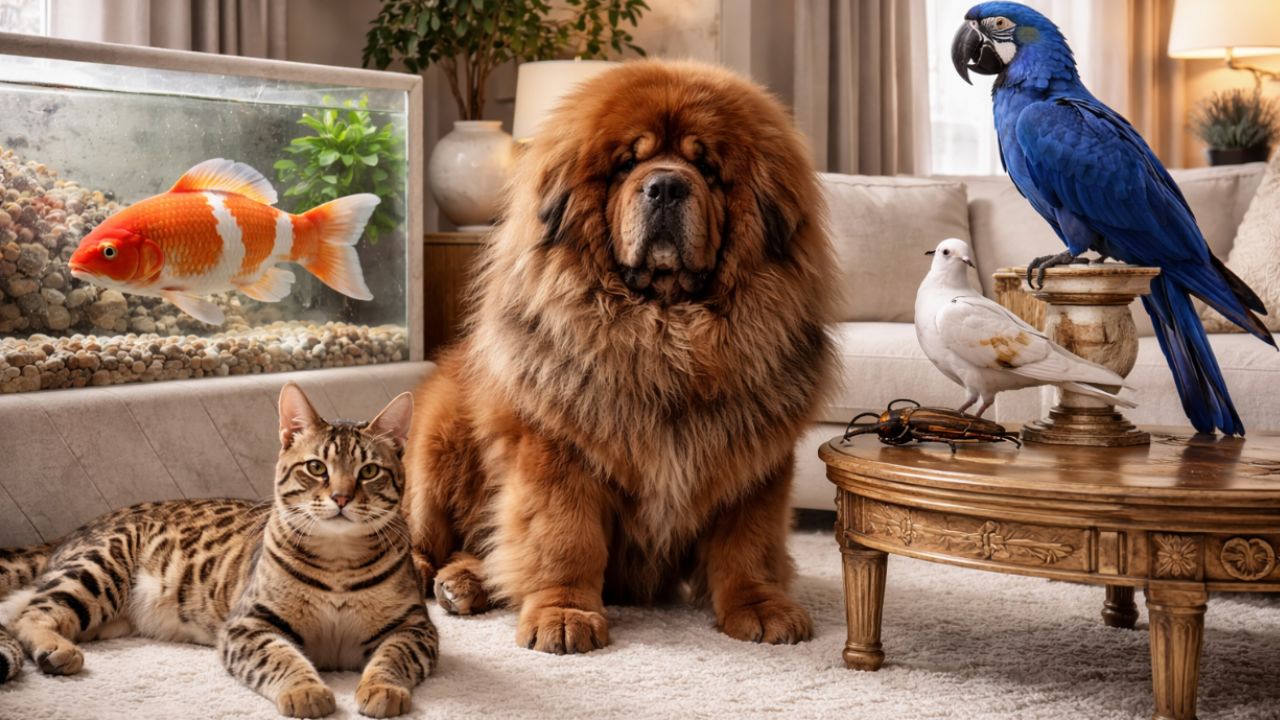
In an increasingly fast-paced and digital world, loneliness has become one of the defining traits of our time. In this context, pets have taken on an essential role in people’s lives, offering companionship, affection, and a genuine sense of belonging.
+ Discover the US$1.8 million 6×6 motorhome that combines extreme luxury and heavy off-road capability
Recent studies indicate that living with pets is associated with reduced anxiety and improved mental health, thanks to the release of neurotransmitters linked to well-being — a phenomenon widely discussed by specialists cited by The Richest.
This emotional shift is also reflected in the numbers. Data presented by The Richest show that in 1988, about 56% of U.S. households had pets. By 2023, that number had risen to approximately 66%, equivalent to nearly 87 million homes.
More than simple companions, pets have come to be considered members of the family: research indicates that around 97% of owners see their animals this way, which helps explain the significant growth in spending on food, healthcare, well-being — and, in extreme cases, multimillion-dollar acquisitions.
According to market analyses cited by The Richest, annual spending on pets in the United States jumped from around $90 billion in 2018 to more than $157 billion today. Globally, the sector surpassed $259 billion in 2024, with projections pointing to more than $427 billion by 2032. This growth has driven up the value of certain breeds and rare specimens, turning some animals into true living symbols of luxury and status.
Below, discover some of the most expensive pets in the world, according to a survey by The Richest, and understand why they reached such extraordinary prices.
6. Sir Lancelot Encore — the most expensive cloned dog in history
In 2009, the couple Edgar and Nina Otto drew global attention by investing $155,000 in the cloning of their deceased Labrador, Sir Lancelot, as reported by The Richest. The original dog had died of cancer, and the decision to clone him stemmed from the strong emotional bond the couple shared with the animal.
The Ottos had stored Lancelot’s DNA before his death, making cloning possible — a technology that was still in its early stages at the time. The result was Sir Lancelot Encore, who became the first cloned dog to be sold at a public auction and the most expensive of his kind up to that point. For comparison, today the average cost to clone a dog is around $50,000.
The cloning process, which involves implanting genetic material into a surrogate mother, is considered controversial and does not guarantee the reproduction of the original animal’s personality — a point publicly acknowledged by the owners themselves, according to The Richest.
5. Armando — the millionaire racing pigeon
The world of pigeon racing may seem distant to many, but it moves impressive sums of money. Armando, a Belgian racing pigeon, made history when he was sold for around $1.42 million in 2019, as detailed by The Richest.
A champion of prestigious competitions such as the ACE Pigeon Race and the Pigeon Olympics, Armando stood out not only for his athletic performance but also for his genetic value. During an auction organized by the PIPA platform, two Chinese buyers competed for the bird, driving the price far beyond initial expectations.
For comparison, most racing pigeons are sold for amounts between $2,500 and $3,000, making Armando’s case an extreme exception within the sport, as highlighted by The Richest.
4. Big Splash — the red Tibetan mastiff
In 2011, a red-coated Tibetan mastiff known as Big Splash (or Hong Dong) was sold in China for around $1.5 million, according to information compiled by The Richest. At just 11 months old, the dog already weighed over 80 kilograms and had an extremely rare coloration highly valued in Chinese culture.
At that time, the Tibetan mastiff was seen as a symbol of prosperity, status, and economic power. Wealthy breeders and collectors competed for the most impressive specimens, especially those with physical traits considered auspicious, such as red fur.
3. S Legend — the $1.8 million koi carp
Although often seen merely as ornamental fish, koi hold a special place in the world of luxury. According to The Richest, the koi carp S Legend, of the Kohaku variety, was sold in 2018 for approximately $1.8 million.
Bred by the renowned Sakai Fish Farm in Japan, S Legend won the Grand Champion title at the All Japan Koi Show, one of the most prestigious competitions in the world. Evaluated by strict criteria such as color pattern, body structure, and skin quality, the carp also stood out for its enormous reproductive potential, capable of producing thousands of descendants with high genetic value.
2. Golden Tibetan mastiff — the pinnacle of canine luxury
In 2014, a golden-coated Tibetan mastiff was sold for around $1.9 million, marking the peak of the breed’s valuation, as reported by The Richest. The animal, bred by Zhang Gengyun, stood nearly 80 centimeters tall and weighed about 90 kilograms.
In Chinese culture, the color gold is strongly associated with wealth and good fortune, which further increased the dog’s appeal among millionaire buyers. However, the breed’s extreme success led to overproduction, causing the value of Tibetan mastiffs to plummet just a few years later — a market collapse widely documented by the international press, according to The Richest.
1. New Kim — the most expensive pet in the world
The title of the most expensive pet in history belongs to New Kim, a racing pigeon sold for around $1.9 million in 2020. The case, detailed by The Richest, took place during an auction in Belgium, a country considered the birthplace of competitive pigeon breeding.
Bred by Kurt Van de Wouwer, New Kim was contested by two Chinese buyers, driving the price far beyond expectations. Despite already being retired from competitions, her genetic value and reproductive potential justified the record price. The entire auction raised nearly $7 million, with New Kim alone accounting for about one-third of that total.
Why do some animals cost so much?
According to The Richest, the exorbitant prices of these animals are explained by a combination of factors: genetic rarity, award-winning lineage, exceptional performance, cultural value, and above all, the status they represent for their owners. In many cases, these animals cease to be mere companions and become emotional and symbolic investments.
Source: The Richest. This content was created with the help of AI and reviewed by the editorial team.