
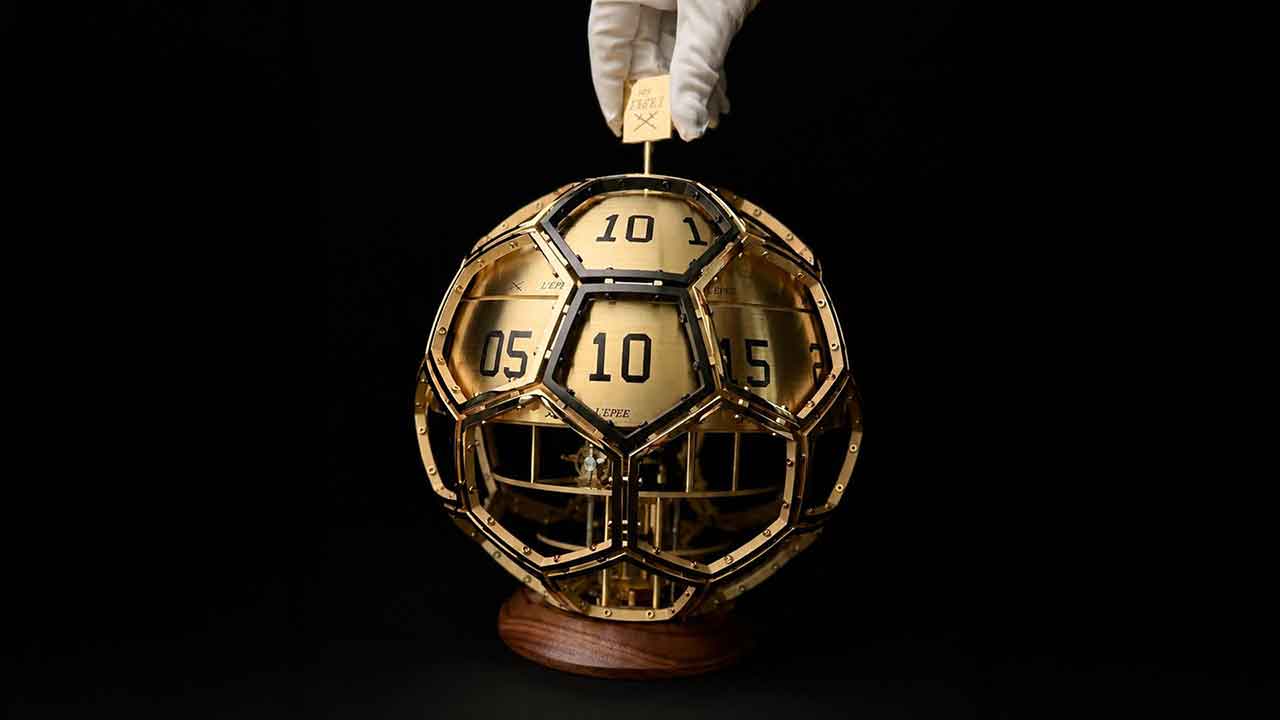
At first glance, it could be a sculpture created to celebrate soccer. Look a little closer, however, and a far more complex piece of engineering is revealed: inside the sphere is a mechanical clock made up of 882 components, with an eight-day power reserve and an unconventional way of displaying the hours and minutes.
Called The Football, the creation comes from Swiss clockmaker L’Épée 1839, part of the LVMH group. Instead of bringing haute horlogerie to the wrist, the brand transformed its mechanisms into a decorative object that reproduces the proportions of an official soccer ball.

The price matches the concept: approximately US$40,000.
According to Luxurylaunches, the clock-sculpture measures about 8.6 inches in diameter — roughly 22 centimeters — and weighs 4.2 kg. The result is a long way from a ball that could be kicked around on a field: this is a metal object designed to occupy a prominent place in a collection.
A ball made from 882 components
The external construction is one of its most striking features. The structure follows the familiar geometry formed by 12 pentagons and 20 hexagons, a pattern associated with the classic soccer ball design and originally inspired by the Telstar satellite, launched in 1962.
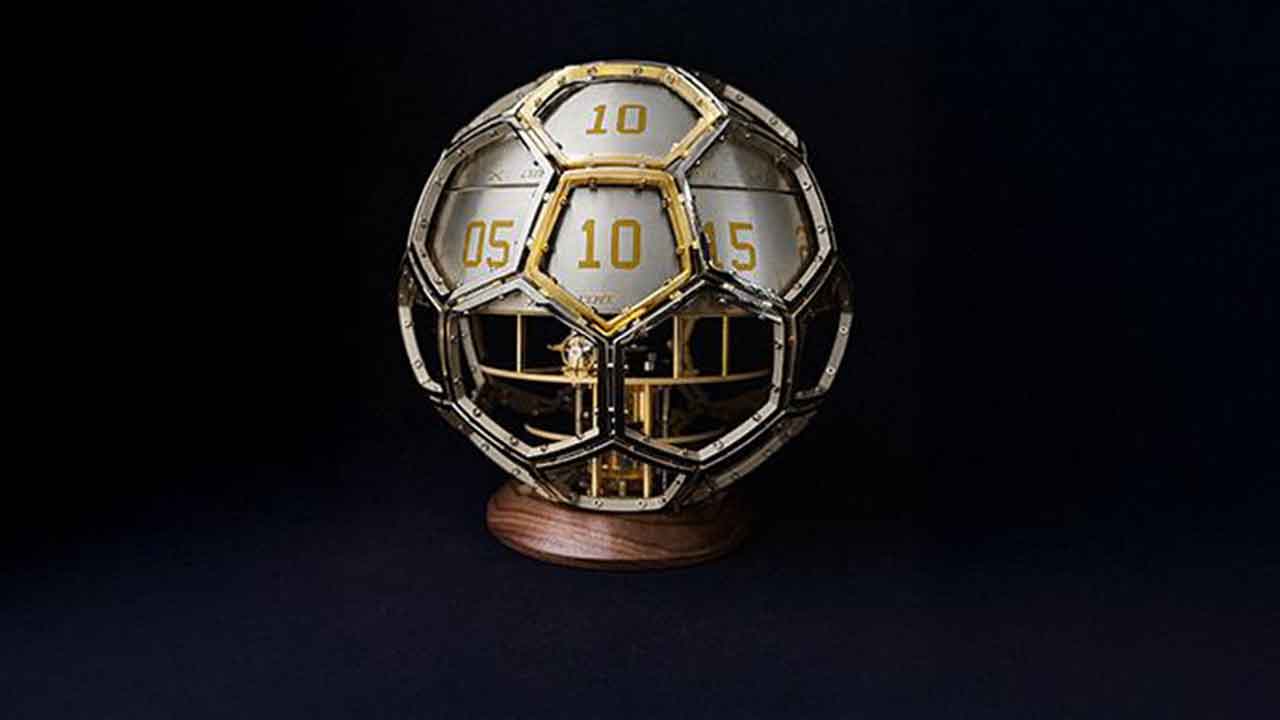
In L’Épée 1839’s interpretation, however, this geometry is more than just aesthetic. The structure acts as a kind of exoskeleton, allowing part of the mechanical complexity hidden inside the object to remain visible.
The piece is divided into two interlocking modules, while the time display has been incorporated into the design of the sphere itself. Instead of conventional hands, rotating discs display the hours and minutes.
The mechanism is not completely hidden either. On the lower section, the gears and escapement can be seen at work, reinforcing the kinetic nature of the creation.
Mechanism runs for eight days
Inside the sphere is a movement developed by L’Épée 1839 itself. It operates at a frequency of 18,000 vibrations per hour, or 2.5 Hz, and provides enough power reserve to keep the clock running for eight days.
To wind it, a dedicated key must be used at the top of the piece. The system preserves part of the traditional experience of mechanical watchmaking, but on a very different scale from that found in a wristwatch.
Rather than hiding the engineering, the idea is precisely to put it on display. The exposed movement allows the workings of the machine to be visually observed as time advances on the discs integrated into the structure.
Only 99 units of each version
Exclusivity is also part of the project. The Football will be produced in four different finishes: gold-plated, palladium-plated and two two-tone options, one with black numerals and the other with gold numerals.
Each version will be limited to 99 pieces.
The new creation follows another project that brought soccer and haute horlogerie together within the LVMH universe. L’Épée 1839 took part in the development of the Unity Time Object, a unique piece created in collaboration with La Fabrique du Temps Louis Vuitton.
In that project, a diamond-decorated clock-ball was presented inside a specially made Monogram trunk and was later auctioned by Sotheby’s to benefit UNICEF.
Now, The Football brings part of that concept to a limited series. Without diamonds and no longer a one-of-a-kind piece, the object preserves the central idea: transforming one of the most recognizable symbols of sport into a demonstration of mechanical engineering and haute horlogerie.
+ Ukrainian Navy says it hit Russian vessel Nefrit in Port of Sochi
+ Lamborghini launches US$ 5,000 baby stroller with supercar leather and only 500 units
Source and images: Luxury Launches | L’Épée 1839. This content was created with the help of AI and reviewed by the editorial team.