
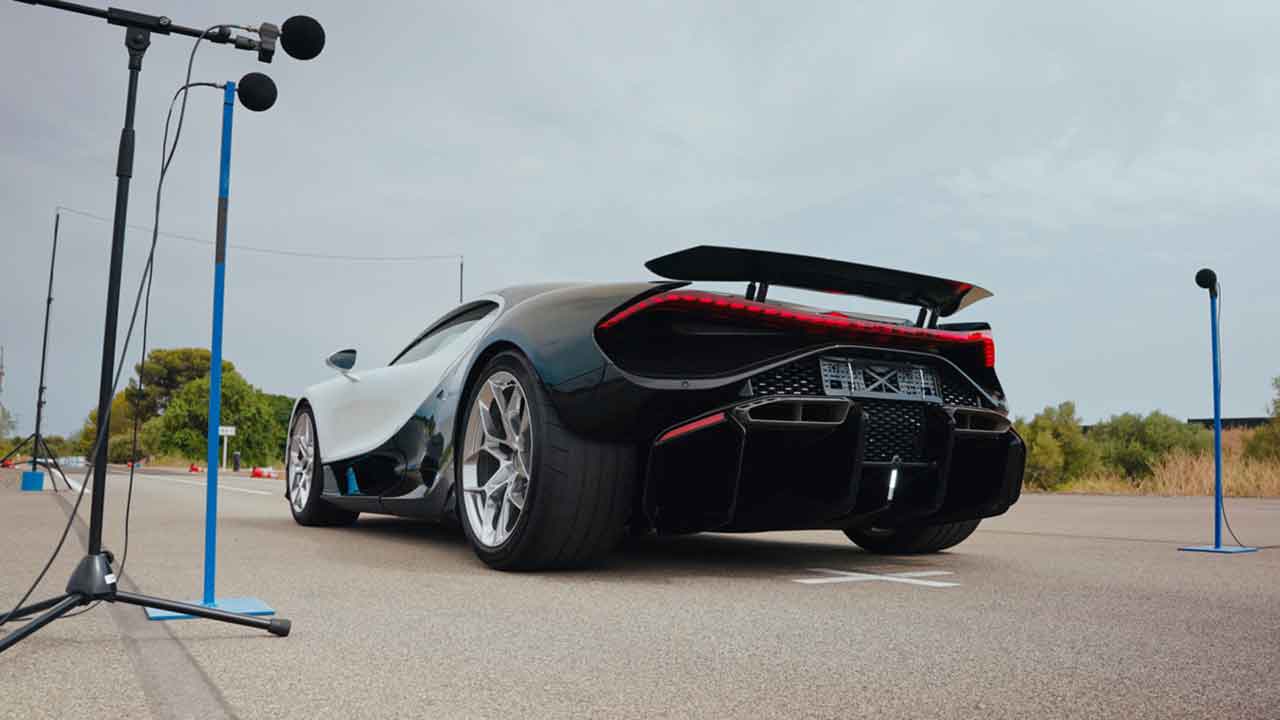
Naturally aspirated V16 revs to 9,000 rpm and had its exhaust and intake developed to preserve a distinctive sound signature while staying within homologation limits
Bugatti has completed one of the key stages in the acoustic development of the Tourbillon, its new hypercar powered by a naturally aspirated V16 engine combined with an electric propulsion system. The work focused on creating a distinctive sound signature for the model without relying on artificial reproduction of engine noise through the speakers.
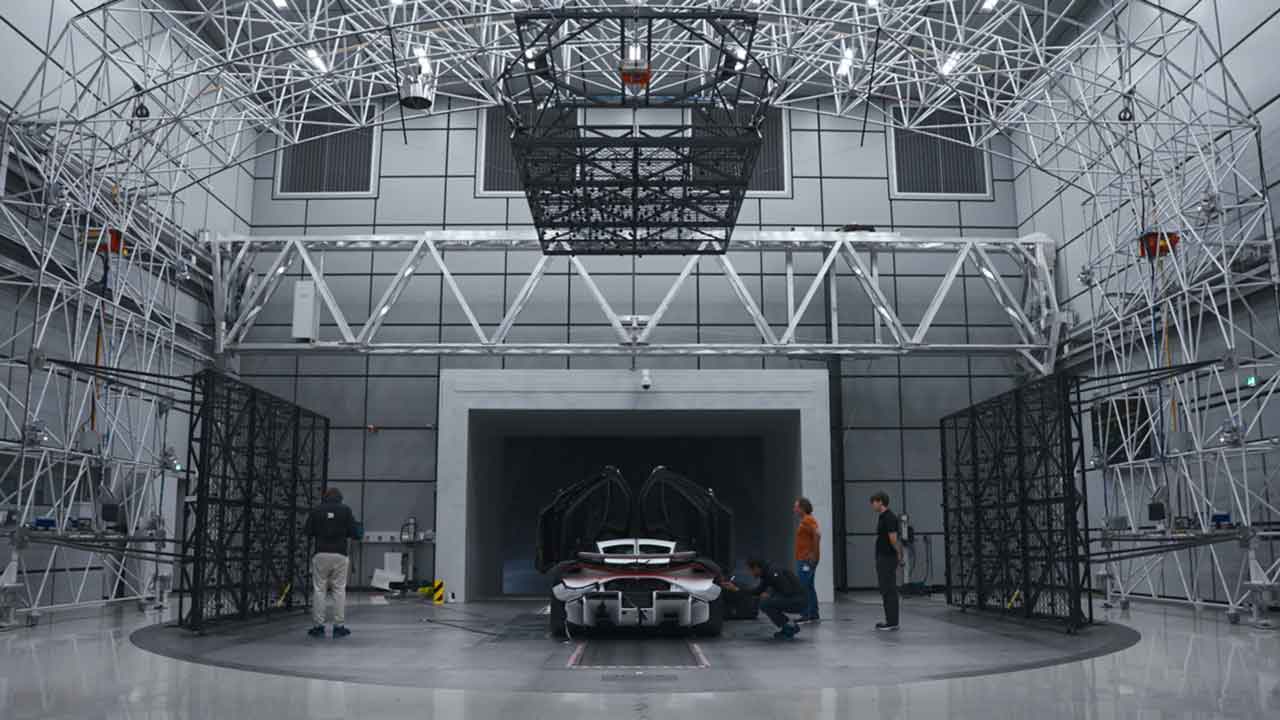
The task took on particular importance because the Tourbillon represents a major change from the previous generation of models produced by the French manufacturer. For more than two decades, the W16 engine used since the Veyron became one of the brand’s most recognizable characteristics, later appearing in models such as the Chiron, Mistral and Bolide.
With the adoption of a naturally aspirated V16, engineers had to develop a different acoustic identity while preserving some characteristics associated with previous Bugatti models.
According to Romain Volatier, head of NVH — the industry acronym for noise, vibration and harshness — and acoustics at Bugatti, the goal was not to create an engine with an excessively clean sound.

The team sought to preserve some of the raw character traditionally associated with the manufacturer’s engines, while adapting this quality to the behavior of a naturally aspirated powertrain.
Thousands of simulations
Development involved thousands of simulations of the air intake and exhaust systems. Engineers evaluated different configurations to find a balance between performance, acoustic comfort and the desired sound response.
Another factor considered was communication between the car and the driver.
For Paolo Magrone, Bugatti development driver, hearing engine speed rise as the accelerator is pressed is important for conveying information to the driver. This direct relationship between throttle position, engine speed and sound is also part of the vehicle’s dynamic calibration.
The challenge was to combine this response with the level of comfort expected from a car also designed for conventional road use.
Under low power demand, for example, the hybrid system allows the Tourbillon to travel using its electric system, significantly reducing the noise level perceived inside the cabin. When the V16 starts operating and the driver demands greater performance, the engine’s acoustic character becomes more prominent.
With the windows open, the aim was to allow mechanical sounds from the intake and exhaust to reach the occupants even more directly.
No engine sound reproduced through the speakers
One of the points highlighted by Bugatti is that the sound signature of the Tourbillon does not rely on synthesized or amplified sounds through the audio system.
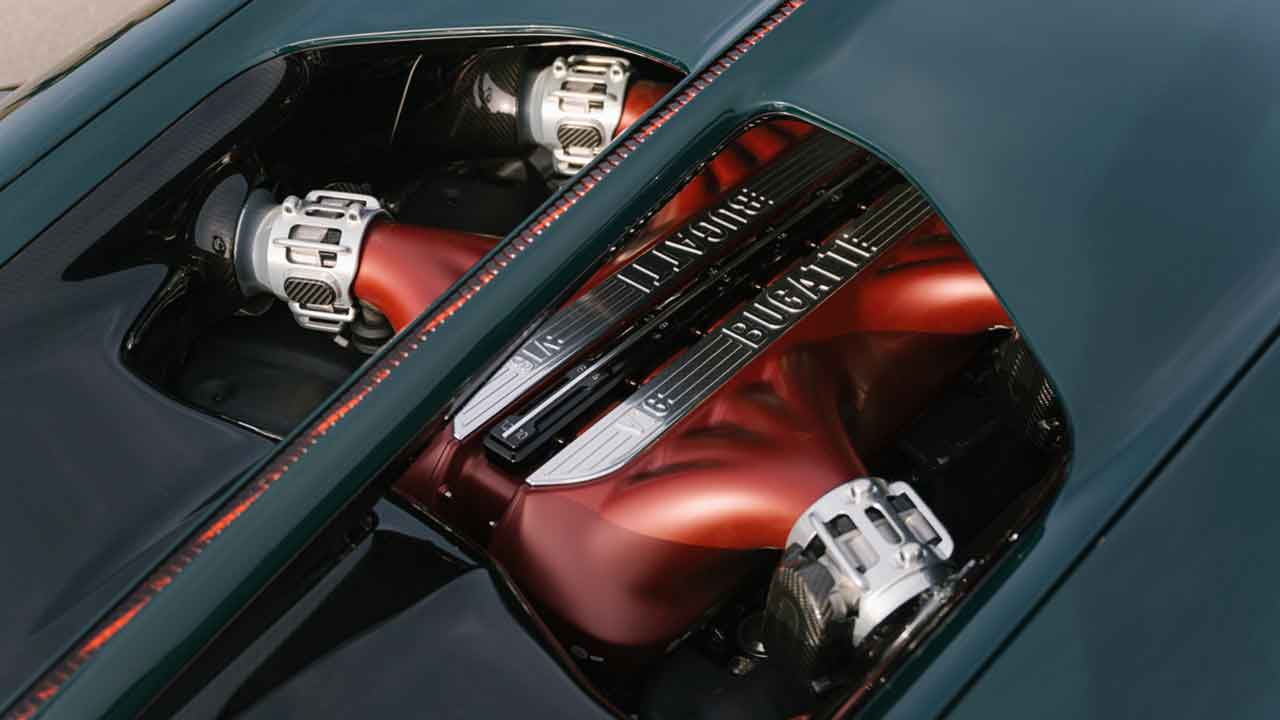
To make this possible, the cabin’s acoustic insulation was developed to block unwanted frequencies without completely eliminating the sounds produced by the mechanical components.
This type of solution requires a delicate balance. Too much insulation can remove part of the perception of the engine, while a cabin that is too exposed to noise can compromise comfort during longer journeys.
72-decibel limit
In addition to meeting the engineers’ expectations, the Tourbillon also had to comply with homologation regulations related to external noise.
In the procedure described by the manufacturer, the applicable maximum limit is 72 decibels. This result does not depend on a single measurement, but on a combination of different tests carried out at constant speed and during acceleration.
Microphones positioned in the test area record much more than just exhaust noise. Tires, airflow over the bodywork and aerodynamic components all contribute to the vehicle’s total sound level.
On the Tourbillon, active aerodynamics added another variable to the process. The movable rear wing, which changes the car’s aerodynamic characteristics according to driving conditions, also affects airflow and consequently the externally measured noise.
Even environmental factors need to be controlled. Temperature and wind speed must remain within specific ranges, while stronger gusts can invalidate a test run.
For this reason, Bugatti carried out a series of preliminary evaluations before final homologation.
V16 reaches 9,000 rpm
Regulatory testing was completed successfully, bringing the main phase of the model’s acoustic development to an end. Minor adjustments may still be made before production begins, but the basic configuration of the system has already been defined.
After approximately three years of Tourbillon development, the V16 now has its sound signature practically finalized.
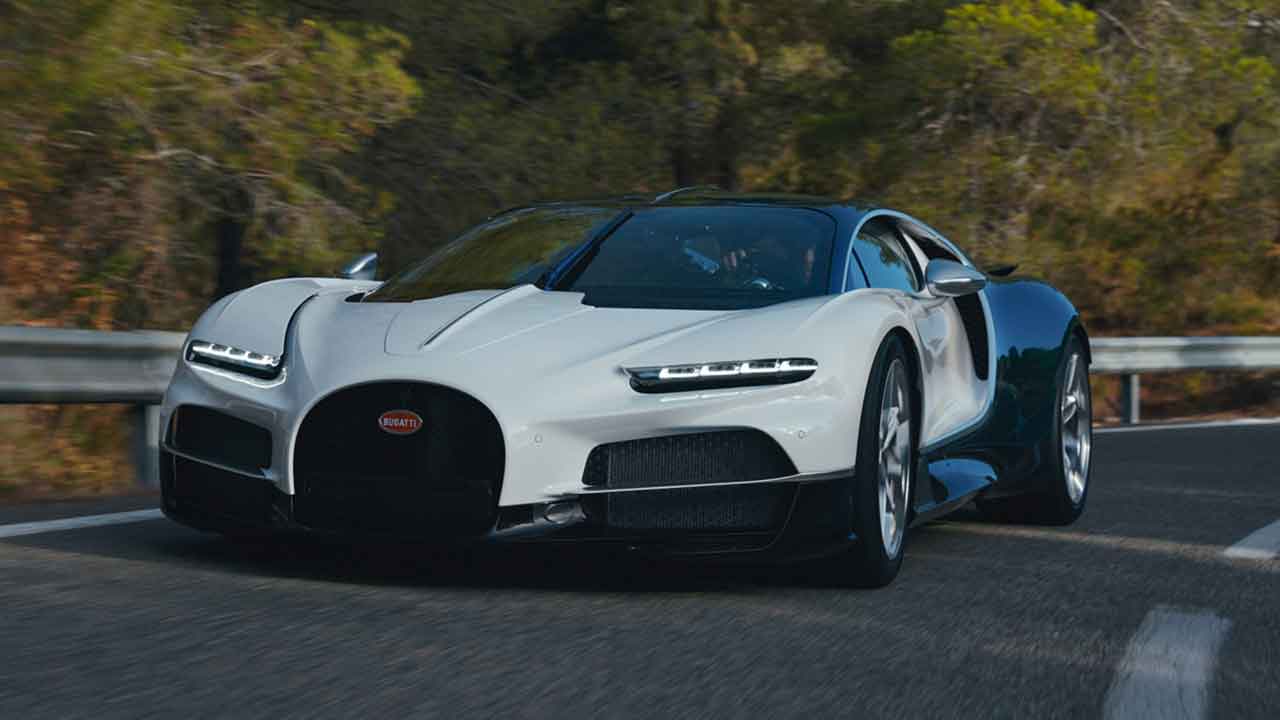
The naturally aspirated engine reaches 9,000 rpm, a characteristic that significantly differentiates its behavior from the previous turbocharged W16 used by Bugatti.
By choosing to generate the entire acoustic experience through mechanical means, the manufacturer is following an approach that is becoming increasingly uncommon among electrified high-performance vehicles, many of which use electronic systems to complement or alter the sound perceived inside the cabin.
With the Tourbillon, the strategy was precisely the opposite: using the intake, exhaust, body insulation and the V16’s natural characteristics to define the sound experience of the new hypercar.
Source: Bugatti. This content was created with the help of AI and reviewed by the editorial team.