
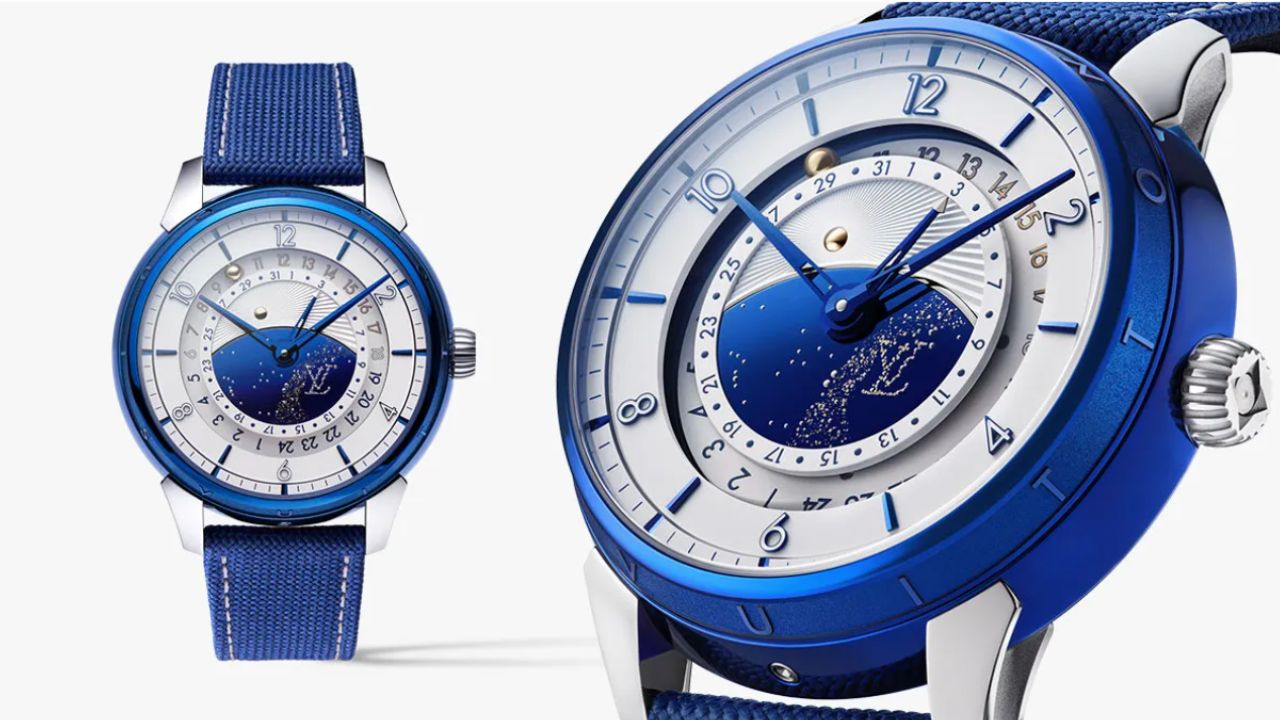
Louis Vuitton has just elevated its status even further in the world of high horology. In a historic collaboration with independent Swiss watchmaker De Bethune, the maison presented a titanium watch that can reach an impressive $4.72 million — a piece that blends extreme engineering, mechanical art, and a clear strategic message: Louis Vuitton wants to be taken seriously by top collectors.
+ 3 fragrances to join the Arab perfume craze in 2026
According to information revealed by Robb Report, the launch marks another chapter in the quiet yet consistent transformation of the brand’s watchmaking division under the leadership of Jean Arnault, who has been responsible for repositioning Louis Vuitton at the highest level of contemporary watchmaking.
A collaboration that goes beyond marketing
Presented at an exclusive event in Tokyo, the LVDB-03 GMT Louis Varius is the direct result of the union between De Bethune’s technical savoir-faire and Louis Vuitton’s refined aesthetic identity. It is an extremely limited edition, with only 12 pieces produced — two of which are accompanied by a handcrafted “sympathique” clock, an absolute rarity in today’s market.
According to Robb Report, this type of partnership offers clear benefits to both sides: Louis Vuitton gains legitimacy among demanding collectors, while De Bethune gains access to resources and virtually unlimited creative freedom.
(Louis Vuitton)
Imposing design and hybrid identity
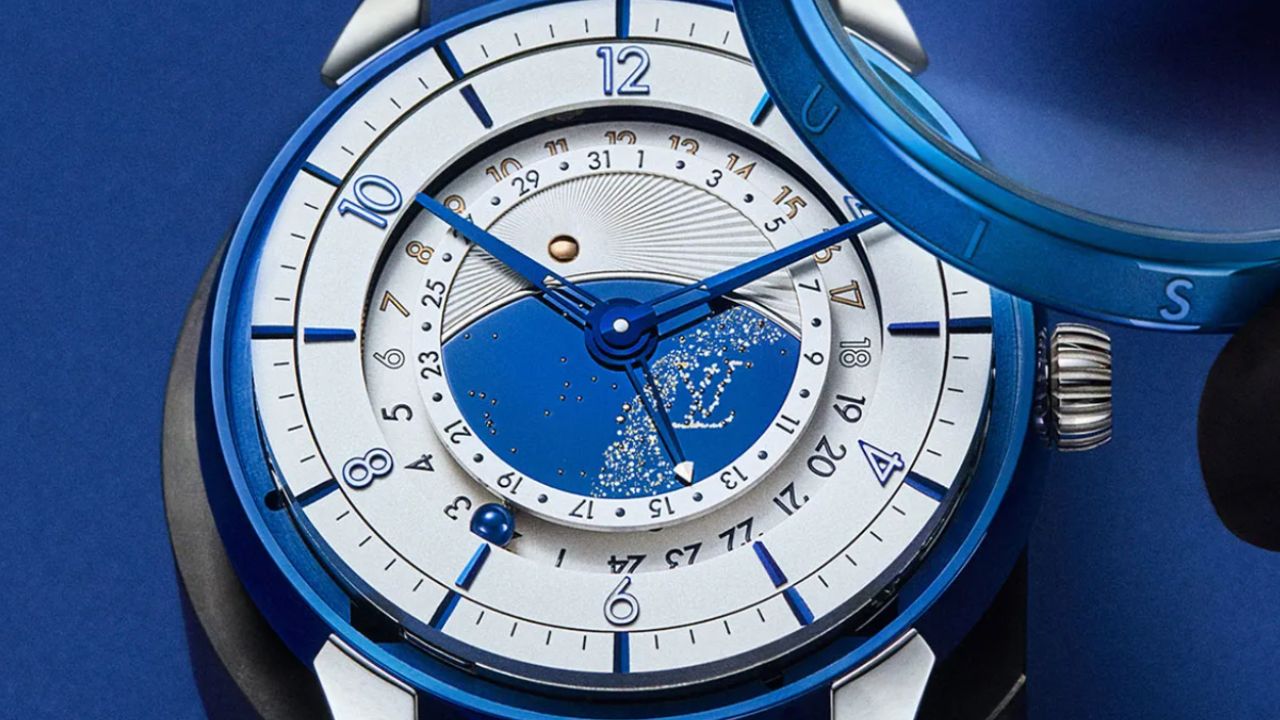
The LVDB-03 GMT retains the foundation of the Tambour design, seen in previous brand collaborations, but here it is reinterpreted with even greater boldness. The Taiko case measures 45 mm in diameter and is crafted from blued titanium — a classic De Bethune signature — with lugs sculpted in platinum.
The dial is a spectacle in its own right. Deep layers reveal a 24-hour GMT scale, rose-gold day and night divisions, and a polished sphere indicating the second time zone. At the center, De Bethune’s signature blue starry sky is enhanced with white-gold details and gold leaf, including a subtle constellation forming the initials “LV”.
A movement conceived as a work of art
Inside the watch is the manually wound DB2507LV movement, developed by De Bethune exclusively for this collaboration. It consists of 404 components, operates at a frequency of 4 Hz, and offers a five-day power reserve. The assembly includes a titanium balance wheel, a silicon escape wheel, and a sophisticated triple shock-absorption system.
But the most impressive detail, highlighted by Robb Report, is the Sympathique function — a historic feature inspired by Abraham-Louis Breguet that allows a “master” clock to automatically adjust and wind the wristwatch.
The Sympathique clock: mechanics on a monumental scale
Only two complete sets include the LVDB-003 Sympathique Louis Varius clock, a monumental piece made of titanium, meteorite, and rose gold. Weighing around 10 kilograms, the object combines high mechanics with narrative art.
Its structure is decorated with scenes engraved by Belgian artist François Schuiten, depicting 19th-century exploration landscapes such as steam trains, balloons over the African savanna, and expeditions in remote mountains. These elements slowly rotate around the mechanism, creating a hypnotic visual experience.
Beneath the dome, the wristwatch is placed to be automatically adjusted — an almost magical gesture that pays tribute to centuries of watchmaking tradition.
Pricing and strategic positioning
The 10 LVDB-03 GMT Louis Varius watches without the Sympathique will be sold for €375,000 each (around $442,000). The two complete sets, including the monumental clock, are priced at €4 million, equivalent to $4.72 million.
More than just impressive figures, this collaboration reinforces a clear shift at Louis Vuitton. By aligning with established names in independent watchmaking, the brand seeks not only impact but lasting relevance. As Robb Report notes, this is not a fleeting novelty, but a calculated strategy to shape the future of the maison in the realm of extreme luxury.
Source: Robb Report. This content was created with the help of AI and reviewed by the editorial team.