
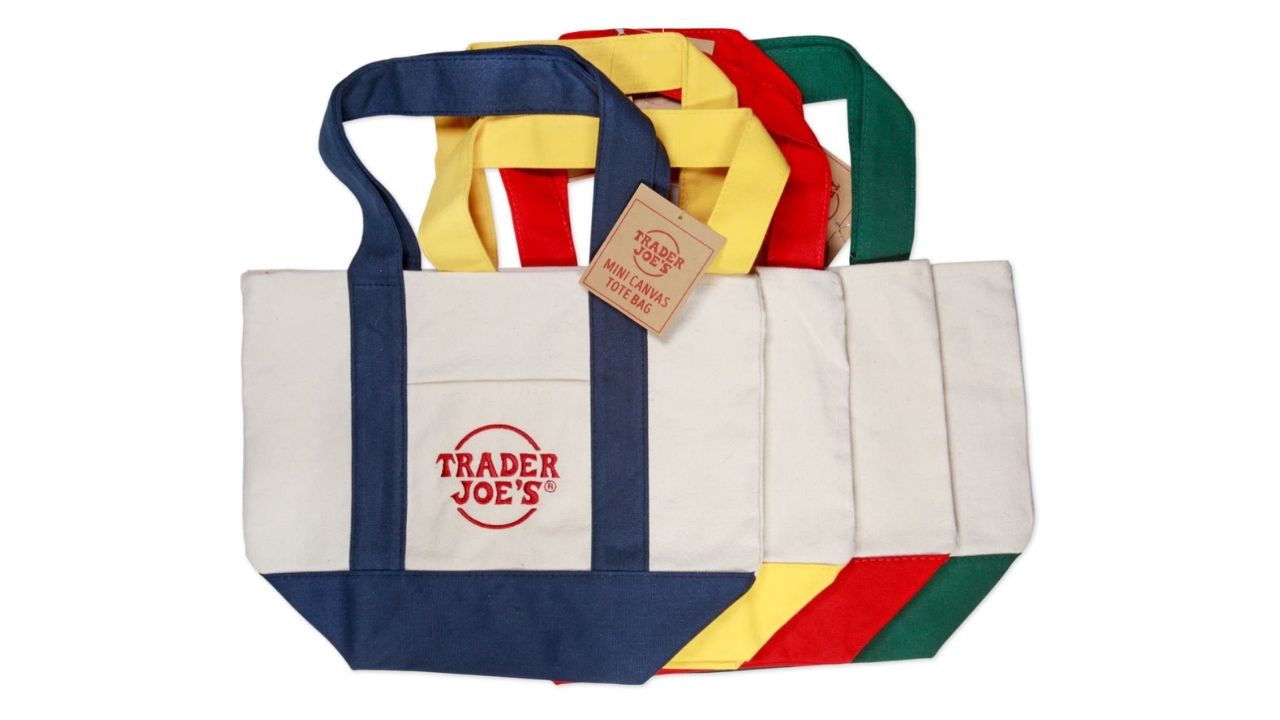
The world of luxury has changed — and perhaps no one has noticed it as clearly as with a simple canvas bag from the American chain Trader Joe’s.
Sold for around $3 and originally created to carry everyday groceries, it has become one of the most unlikely objects to turn into a symbol of luxury, desire, and even symbolic value on the global stage.
But how did something so basic become a style icon?
From functional item to object of desire
The Trader Joe’s canvas bag has always been practical, durable, and affordable. Nothing about it suggested exclusivity: simple design, discreet logo, and a low price. Even so, smaller versions, seasonal colors, and limited editions began selling out quickly in stores, drawing attention on social media.
Videos on TikTok and Instagram showing people flaunting their bags, comparing colors, or sharing how they managed to buy one started to go viral. In a short time, the ordinary object gained a new narrative.
The power of scarcity
A key part of this phenomenon lies in the fact that Trader Joe’s exists only in the United States. Outside the country, the bag came to represent something rare: access to a brand that is not available locally.
In cities like London, Seoul, Tokyo, or Paris, carrying the bag stopped being just a practical choice and became a symbol of travel, cultural awareness, and connection to global trends. Scarcity — real or perceived — turned the item into a marker of belonging.
Status without a luxury logo
Unlike traditional brands, the Trader Joe’s bag does not flaunt a high price or a designer signature. And that is precisely why it gained relevance. It fits perfectly into today’s aesthetic of “quiet luxury” and ironic consumption: using something inexpensive that only insiders recognize.
In this context, the value lies not in the material, but in the story. The bag communicates that its owner knows cultural references, frequents certain places, and takes part in a global conversation that goes beyond the obvious.
The resale market and the hype exaggeration
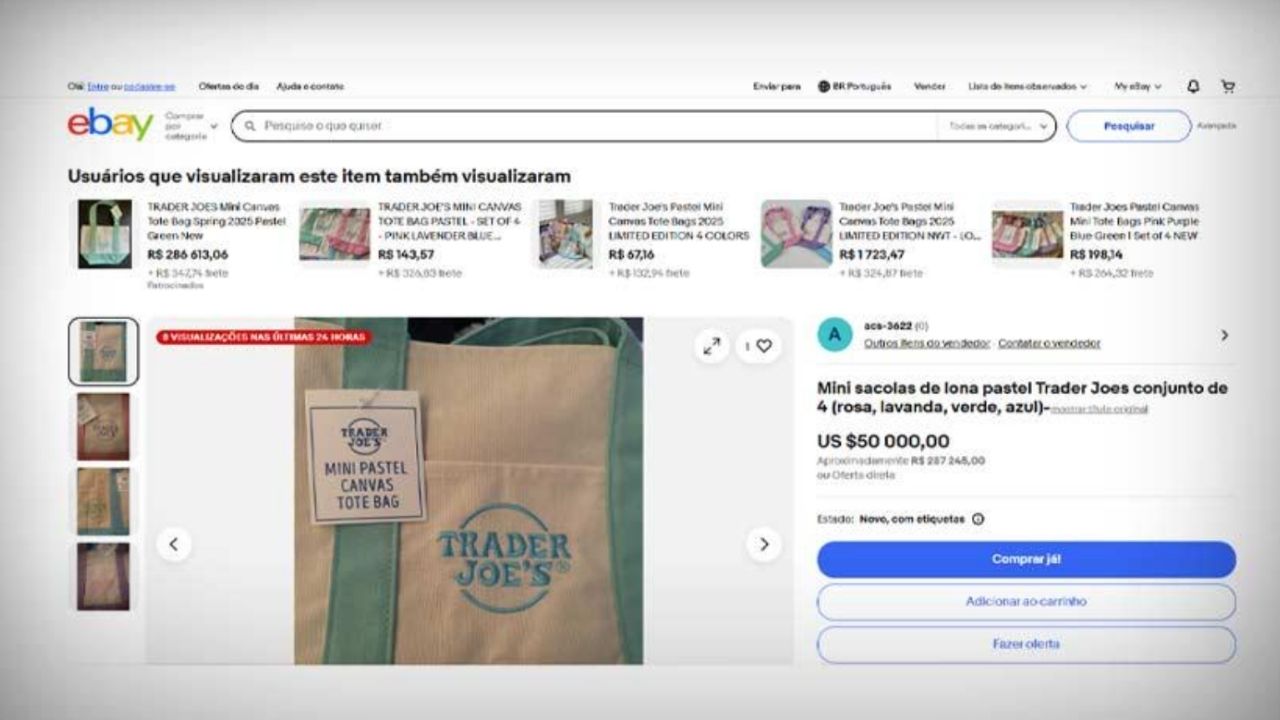
With its viral success, listings began appearing on resale platforms with prices far above the original value. Some listings reached unrealistic figures, further fueling the buzz — even if not all of those sales actually went through.
Still, the mere fact that a supermarket item was treated as a collectible helped cement its new status.
What this bag represents today
More than an accessory, the Trader Joe’s bag has become a symbol of our time. It shows how:
- the value of an object can be socially constructed
- the aesthetics of everyday life can gain prestige
- and how social media redefine what desire, luxury, and identity mean
In the end, this $3 bag did not become luxury because of its price — but because it represents belonging, narrative, and cultural timing. A reminder that today, true status is often found in the most unexpected details.
This content was created with the help of AI and reviewed by the editorial team.
